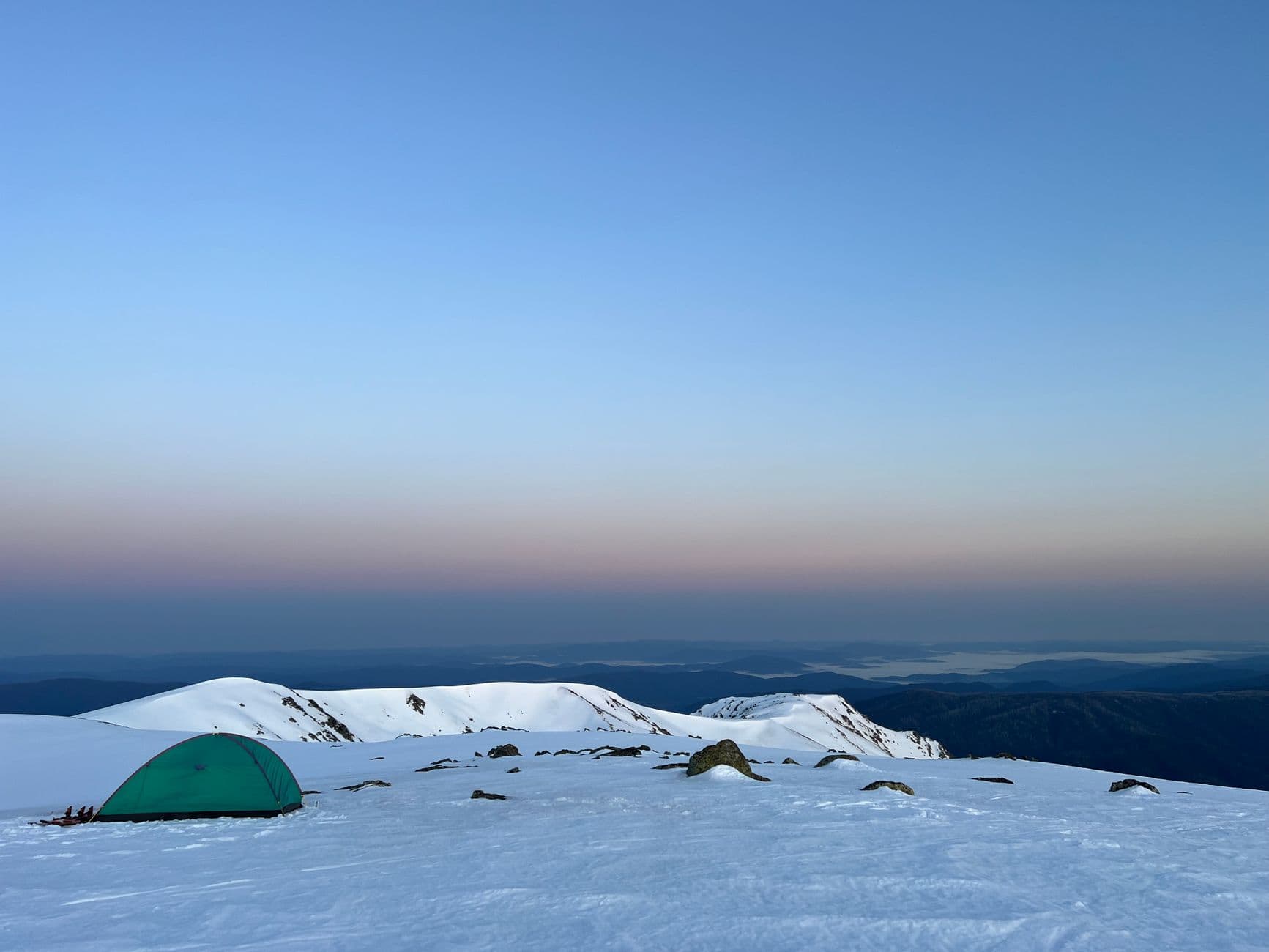
Get a 3-season tent — it's the right choice for almost everyone. It's lighter, far better ventilated, and built for spring, summer, and fall. A 4-season tent trades ventilation and weight for the strength to survive winter: heavier fabric, fewer mesh panels, and more poles to shed snow and stand up to storm winds. Only choose 4-season if you camp in real winter, snow, or exposed alpine conditions — otherwise a 3-season tent plus a warm sleeping bag handles it. New to the ratings? See how tent types compare, or how to choose a tent.
3-season vs 4-season at a glance
| Factor | 3-season tent | 4-season tent |
|---|---|---|
| Best seasons | Spring, summer, fall | Winter + all year |
| Handles | Bugs, wind, moderate rain | Snow load, storm winds |
| Mesh / ventilation | Lots — stays cool | Minimal — retains warmth |
| Poles | Fewer, lighter | More & stronger (geometric) |
| Weight | Lighter | Heavier |
| Condensation risk | Low (well vented) | Higher (less mesh) |
| Price | $–$$ | $$$ |
| Best for | Most campers | Winter / alpine / mountaineering |
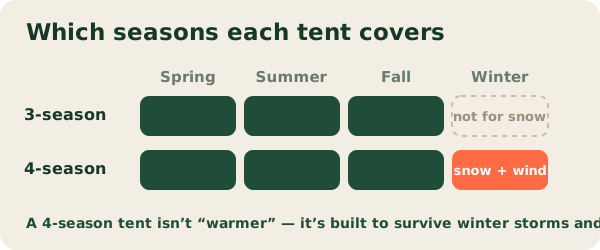
What's actually different?
The season rating isn't about temperature — it's about structure and airflow. Four things change as you go from 3- to 4-season:
- Mesh vs solid fabric. 3-season tents use lots of mesh to dump heat and moisture; 4-season tents swap most of it for solid fabric to hold warmth and block spindrift snow.
- Poles. 4-season tents add poles and use geometric (dome/pyramid) shapes so they shed snow and don't buckle under a load or in high wind. 3-season tents get away with fewer, lighter poles.
- Fabric weight. Heavier canopy and fly fabrics on a 4-season resist storm abrasion and snow — at a real weight cost.
- Guy-outs. More guy points and stronger stakes anchor a 4-season tent against the wind that would flatten a light 3-season.
One knock-on effect worth knowing: because 4-season tents have far less mesh, they're more prone to condensation — you have to work harder at ventilation even in the cold.
3-season tents
The default tent for a reason. A 3-season tent is light, breathable, and cheaper, and it comfortably covers the spring-to-fall camping that most people actually do — handling bugs, wind, and moderate rain without fuss. The trade-off is honest: it isn't built for heavy snow load or sustained winter storm winds, and all that mesh makes it chilly on a cold, exposed night.
- Lighter and cheaper
- Excellent ventilation — cool and low-condensation
- Covers 90%+ of real-world trips
- Huge range of models and sizes
- Not built for snow load or winter storms
- Mesh lets heat out on cold nights
Best for: almost everyone — spring, summer, and fall camping. Most of our 2-person picks and family tents are 3-season.
4-season tents
A specialist tool, not an upgrade. A 4-season tent is engineered to keep you alive and dry when winter turns serious — snow piling on the fly, wind that would invert a lighter tent, and cold that a mesh-heavy shelter can't hold out. You pay for it in weight, money, and a stuffy, hot experience the moment the weather is anything but wintry. For canvas four-season comfort on long stays, a yurt tent with a stove is the glamping-scale version.
- Survives snow load and storm winds
- Warmer — holds heat with less mesh
- Stronger poles and geometry
- Heavy and expensive
- Hot and stuffy outside winter
- More condensation-prone (less mesh)
Best for: winter camping, mountaineering, and exposed alpine trips — see our picks for the best 4-season tents. Staying warm in one? See how to insulate a tent for winter and how to heat a tent safely.
How we compare: these are the consistent, published characteristics of each tent class and the patterns across many owner reviews — not lab testing. See how we choose.
What about a “3-4 season” tent?
There's a genuine middle ground, sometimes called extended-season or convertible: mostly a 3-season tent, but with removable mesh panels or extra guy-outs that let it shrug off light snow and shoulder-season cold. If you push into late fall or early spring — but not deep winter — a 3-4 season tent is often the smartest single tent to own, giving you most of the range without the full weight and heat penalty of a true 4-season.
So, which should you choose?
Camp spring through fall? A 3-season tent, every time — lighter, cooler, cheaper, and all you need. Actually camp in snow and winter storms? A 4-season tent is essential kit, not a luxury. Somewhere in between (late/early shoulder seasons)? Look at a 3-4 season convertible. Whatever the rating, match the tent type too — compare every tent style before you pick a model.
FAQ
What's the difference between a 3-season and 4-season tent?
A 3-season tent is built for spring, summer, and fall — lightweight, lots of mesh for ventilation, and enough weather protection for bugs, wind, and rain. A 4-season tent is built to survive winter: heavier fabrics, fewer mesh panels, and more (often geometric) poles to shed snow and stand up to storm winds. The 4-season trades airflow and weight for strength.
Do I really need a 4-season tent?
For most campers, no. A good 3-season tent handles almost every trip from spring through fall. You only need a 4-season tent if you camp in genuine winter — snow, sustained high winds, or exposed alpine and mountaineering conditions. For an occasional cold night, a warmer sleeping bag and a 3-season tent are usually enough.
Can you use a 4-season tent in summer?
You can, but you probably won't enjoy it. With minimal mesh and heavier fabric, 4-season tents run hot and stuffy in warm weather and are heavier to carry. They're built to keep heat in and weather out, which is exactly wrong for a hot summer night. Use a 3-season tent when it's warm.
Are 4-season tents warmer?
A little, but that's not really the point. Fewer mesh panels and heavier fabric do trap some warmth, but a 4-season tent isn't a heater — its job is to survive snow load and storm winds without collapsing. Your sleeping bag and pad do the actual warming; the tent just keeps the weather out.
What is a 3-4 season (convertible) tent?
A middle-ground 'extended-season' tent: mostly 3-season, but with removable mesh panels or extra guy-out points that let it handle light snow and shoulder-season cold better than a pure 3-season. It's a sensible pick if you camp into late fall or early spring but don't need full winter capability.
Is a 4-season tent worth it?
Only if you'll actually use it in winter. They're heavier, pricier, and hotter in summer, so buying one 'just in case' usually means carrying a tent that's wrong for 90% of your trips. If you winter camp regularly, it's essential; if you don't, put the money toward a better sleeping bag and pad.