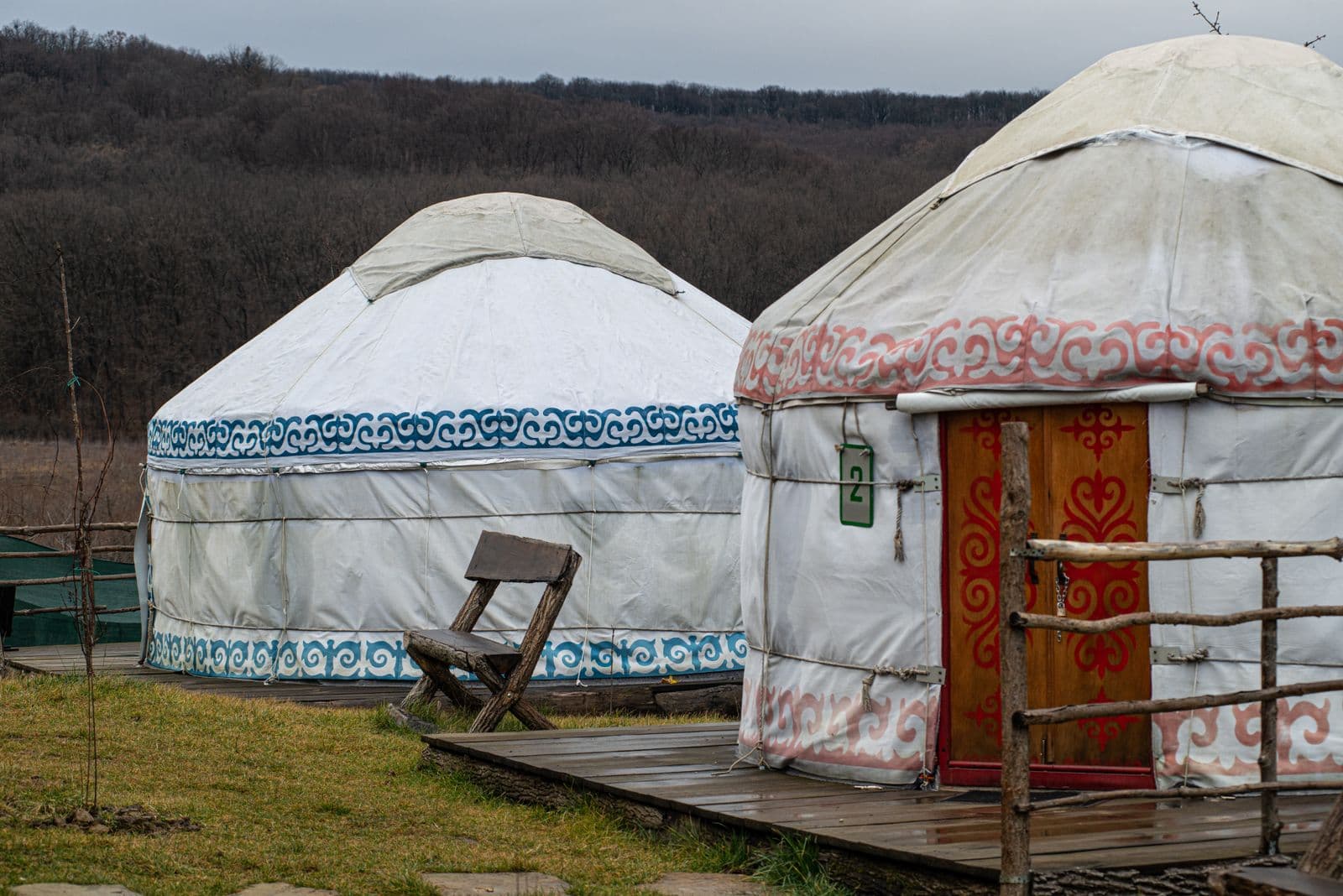
A yurt tent — also sold as a “yurt-style tent” — is a circular canvas shelter with near-vertical lattice walls and a domed roof, prized for stand-up space, insulation, and a room-like feel for glamping and long stays. Expect to pay roughly $700–$2,000+ depending on size (13–20 ft), look for breathable cotton or poly-cotton canvas and a stove jack for four-season warmth, and plan for serious weight and a slow pitch in return.
The yurt tent is the most livable shelter you can pitch: straight walls and a domed roof turn a tent into a room you can stand, cook, and sleep in comfortably. It's the glamping and basecamp favorite — but it's a big commitment in weight, money, and setup, so it pays to know what you're choosing. New to tent styles? Compare every tent type side by side first, or see how to choose a tent.
What to look for in a yurt tent
- Canvas type — cotton breathes best; poly-cotton (TC) is lighter and cheaper; both beat nylon for comfort and condensation.
- Stove jack & insulation — a fireproof stove-jack port lets you run a tent stove for cold-weather and four-season use.
- Wall height & shape — near-vertical lattice walls are what give a yurt its usable, vertical space (vs a bell tent's slope).
- Ventilation — a roof dome plus mesh windows and detachable sidewalls prevent condensation in thick canvas and keep it airy in summer.
- Care needs — canvas must be dried fully before storage to avoid mildew, and benefits from periodic re-proofing.
An honest note: we don't pitch every large yurt ourselves. These picks are based on canvas specs and the patterns across many owner reviews — see how we choose.
The best yurt tents
True canvas yurts first, then the simpler bell-tent alternatives often sold as “glamping yurts.”
| Tent | Best for | Type | Sleeps | Price |
|---|---|---|---|---|
| DANCHEL Canvas Yurt 13ft | Overall | Canvas yurt | 2–4 | $$$ |
| DANCHEL Canvas Yurt 16.4ft | Big groups | Canvas yurt | 6–8 | $$$ |
| White Duck Avalon | Glamping | Bell tent | 4–8 | $$$ |
| DANCHEL Cotton Bell | Value | Bell tent | 4 | $$ |
A true canvas yurt — lattice-style straight walls, a domed roof, and a stove jack — sized for four-person glamping. The do-it-all pick if you want the real yurt experience.
- Breathable 330gsm cotton canvas
- Stove jack for four-season warmth
- Heavy
- Slow to pitch
The same canvas yurt scaled up to a room you can actually live in — built for families, basecamps, and long glamping stays.
- Huge floor for 6–8
- Detachable sidewalls for summer
- Very heavy
- Needs a big, flat pitch
If you want the canvas-and-stove glamping feel with an easier single-pole pitch, a bell tent (often sold as a “glamping yurt”) is the lighter, simpler choice.
- Simpler, faster pitch than a yurt
- Breathable canvas with stove jack
- Sloped walls cut usable space
- Heavy
The budget way into breathable canvas glamping — a solid first tent before you commit to a full-size yurt.
- Most of the canvas feel for less
- Good first glamping tent
- Heavy to move
- Basic fittings
Yurt tent vs bell tent: which glamping shelter?
The two get confused constantly — plenty of tents sold as “glamping yurts” are actually bell tents. The structural difference decides everything else. A yurt tent holds its shape with near-vertical walls and a framework of roof poles meeting a crown ring, so the walls rise straight before the roof domes over — at the same diameter you get close to double the usable floor area, because you can stand and put furniture right against the walls. A bell tent is one center pole with canvas sloping from peak to ground: far simpler and faster to pitch, lighter to move, and cheaper — but the sloping walls eat the edges of the floor.
| Yurt tent | Bell tent | |
|---|---|---|
| Shape | Vertical walls + domed roof | Cone from a single center pole |
| Usable space | Nearly all of the floor, stand-up walls | Center only — walls slope in |
| Pitch | Slow (30 min–hours), two people | Fast (10–20 min), one person |
| Weight & price | Heavier, costs more | Lighter, starts cheaper |
| Best for | Basecamps, long stays, four-season | Festivals, weekends, first glamping tent |
The honest rule: pitching once and staying a while (or heating it through winter) favors the yurt; moving most weekends favors the bell tent. Our bell-tent picks above cover the second case.
Yurt tent sizes & capacity
Yurt tents are measured by floor diameter. Bigger isn't just more sleeping room — it's living space, a stove, and furniture. A rough guide:
| Size | Floor area (approx.) | Best for |
|---|---|---|
| 13 ft / 4 m | ~13 m² (140 sq ft) | 2–4 people, cozy glamping |
| 16.4 ft / 5 m | ~20 m² (215 sq ft) | Families of 4–6, comfortable living |
| 20 ft / 6 m | ~28 m² (300 sq ft) | 6–8 people, basecamps & long stays |
As with any tent, size up if you want room to stand furniture, run a stove, and actually live in it rather than just sleep — see our take on sizing up by one.
How much does a yurt tent cost?
Canvas yurts aren't cheap, but they last. Expect roughly $700–$1,200 for a 13ft yurt, $1,200–$2,000+ for a 16–20ft, and add a few hundred for a wood stove. Simpler bell tents start lower (~$300–$1,500). You're paying for breathable canvas and a durable, repairable build that outlasts several nylon tents — so per season, a well-kept yurt is better value than it first looks.
Yurt tent vs a real yurt (and where to try one first)
A traditional yurt — the Central Asian original — is a semi-permanent home: a wooden lattice wall (the khana), rafters, and a load-bearing crown ring, wrapped in felt or heavy canvas and usually built on a platform to stand for years. A yurt tent borrows the shape and the livability but swaps the wooden skeleton for poles and stakes, so it packs into bags you can (heavily) transport. If you're yurt-curious but not ready to spend four figures, rent one first: many US state parks and Canadian provincial parks offer permanent camping yurts by the night — a cheap way to learn whether the round-tent life fits before you buy your own canvas.
Heating & setting up a yurt tent
The yurt's superpower is the stove jack — a fireproof port that lets you vent a wood stove and stay warm in genuinely cold weather, which no standard nylon tent can do safely. For a comfortable long stay, pitch it on a raised wooden platform (it keeps the floor dry and level), add a groundsheet, and keep the roof dome and a window cracked for airflow so condensation doesn't build under the canvas. Budget 30 minutes to an hour for a 13ft model once you've learned the sequence, and longer for the 16–20ft sizes or a first pitch — always with a second pair of hands. These aren't pitch-and-go tents, which is exactly why they suit basecamps and glamping sites. Want a lighter cold-weather shelter you can actually carry? See the best 4-season tents.
Keep it weatherproof: “weather in” new canvas (wet it and let it dry so the fibers swell and seal), re-proof periodically, and never store it damp. The same principles as our tent waterproofing guide.
FAQ
What is a yurt tent?
A yurt tent is a circular canvas shelter with near-vertical lattice-style walls and a domed roof, modeled on the traditional Central Asian yurt. The straight walls give far more usable, stand-up space than a sloped tent, and most have a stove jack for a wood stove — which is why they're popular for glamping and four-season basecamps. They're heavy and slow to pitch, so they suit semi-permanent setups rather than moving camp nightly.
Is a yurt-style tent the same as a yurt tent?
Mostly yes — 'yurt-style tent' is just the phrase retailers use for a fabric tent shaped like a traditional yurt: near-vertical lattice walls and a domed roof in breathable canvas. It's the same thing as a canvas yurt tent. Watch the label, though — some tents sold as 'yurt-style' or 'glamping yurts' are actually bell tents (a single center pole with sloping walls), so check for the straight, stand-up walls that define the real yurt shape.
How much does a yurt tent cost?
Canvas yurt tents typically run from around $700 for a small 13ft model up to $2,000 or more for a large 20ft yurt with heavy-duty canvas — plus extra for a wood stove. Bell tents, which are simpler, start lower, roughly $300–1,500. You're paying for breathable canvas and durable build, both of which last far longer than cheap nylon.
What's the difference between a yurt tent and a bell tent?
A bell tent is a single center-pole cone of canvas — simple and quick to pitch. A yurt tent has straight, near-vertical walls and a domed roof, giving more vertical, room-like space. Yurts cost and weigh more but feel far more livable; bell tents are lighter, cheaper, and faster. Many tents marketed as 'glamping yurts' are actually bell tents.
Are yurt tents waterproof?
Quality canvas yurts are highly weatherproof: tightly woven cotton or poly-cotton canvas sheds rain and, once 'weathered in' (wetted and dried so the fibers swell), seals well at the seams. They handle heavy weather better than thin nylon, but the canvas must be dried fully before storage or it will mildew. A groundsheet and a raised platform keep the floor dry on long stays.
Are yurt tents four-season?
Many canvas yurts handle all four seasons: the thick fabric insulates, and a stove jack lets you run a tent stove for winter warmth. In summer, breathable canvas and detachable sidewalls keep them airy. They're heavy and slow to pitch, so they suit basecamps and glamping sites rather than nightly moves.
Can you live in a yurt tent?
Yes — yurt tents are a top choice for semi-permanent living and glamping thanks to their space, insulation, and looks. On a raised wooden platform with a stove and good ventilation, a canvas yurt stays comfortable through the seasons. For genuinely permanent, year-round living, a purpose-built hard yurt is sturdier, but a canvas yurt tent covers long stays well.
How long do yurt tents last?
A quality cotton or poly-cotton canvas yurt, dried properly and stored well, can last many years — canvas is far more durable and repairable than thin nylon. The enemy is moisture: pack it away damp and mildew will shorten its life, so always dry it fully and treat the canvas periodically.
How long does it take to set up a yurt tent?
Plan on 30 minutes to an hour for a 13ft yurt tent once you know the sequence, and longer — sometimes a few hours — for a 16–20ft model or your first pitch. It's a two-person job: the walls, roof poles, and heavy canvas all want a second pair of hands. That slow pitch is the trade-off for the room-like space, which is why yurts suit basecamps rather than one-night stops.
Can you leave a yurt tent up all year?
For a season or a long stay, yes — that's what canvas yurts are built for, especially on a raised platform with good airflow. Left up permanently, though, UV and constant weather slowly degrade any canvas: re-proof it each season, check the guy lines and seams after storms, and drop it for winter if you won't be using or heating it. For a truly permanent structure, a wood-framed real yurt is the better tool.
Weighing it against other glamping shelters? See bell tent vs yurt tent, compare every tent type, or for a faster family pitch see inflatable tents and family tents.