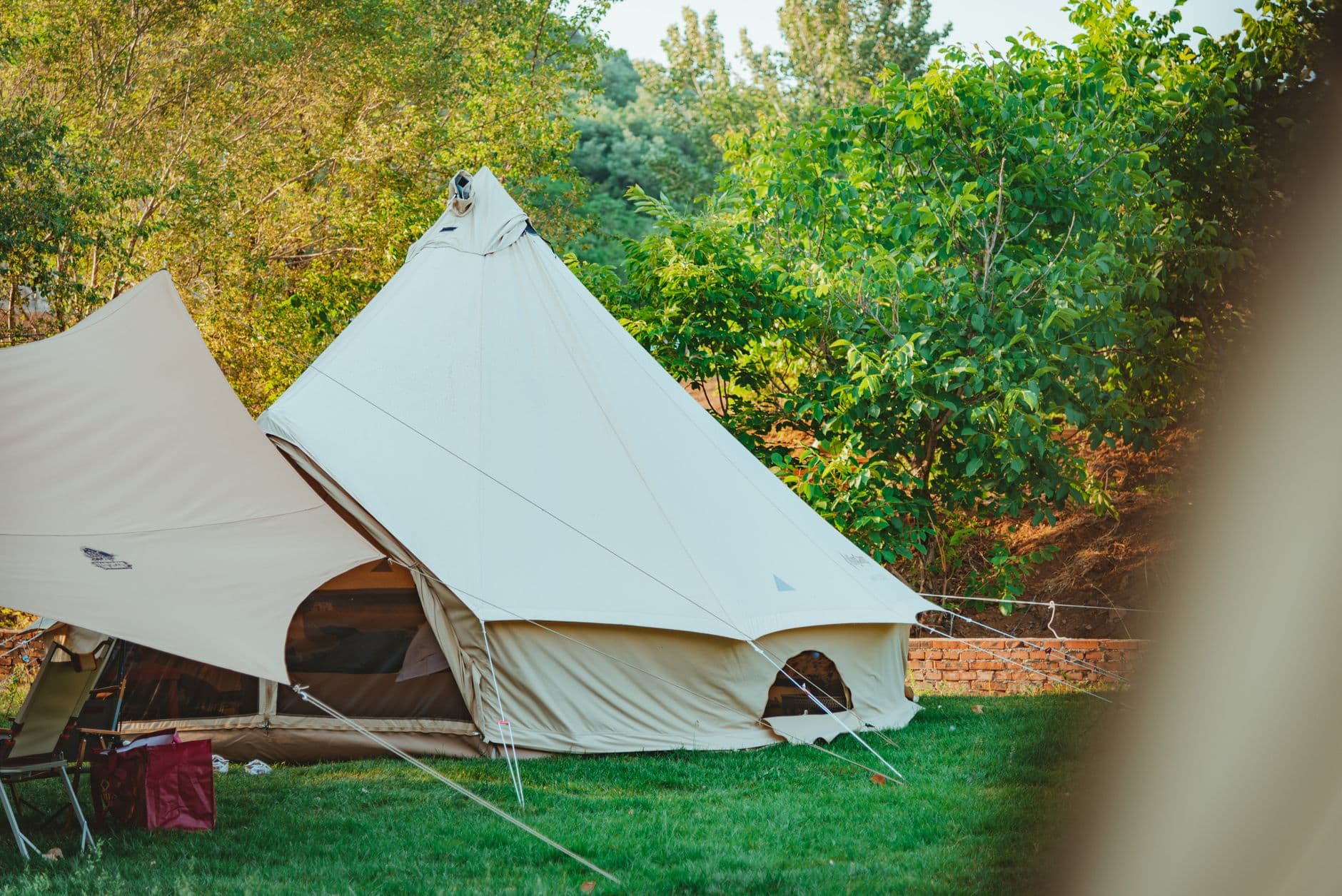
Choose a bell tent if you want a light, affordable canvas shelter that pitches fast for festivals, weekends, and casual glamping. Choose a yurt tent if you want maximum usable space and true all-season comfort for long stays. A yurt's near-vertical walls give close to double the livable floor area and handle a wood stove and winter far better — at a higher price and more setup. Both are a step up in comfort from a standard tent; see all our yurt tent picks if that's the way you lean.
Bell tent vs yurt tent at a glance
| Feature | Bell tent | Yurt tent |
|---|---|---|
| Shape | Single center pole, canvas to the ground | Center + wall poles, vertical walls |
| Usable space | Less — walls slope inward | More — near-vertical walls |
| Setup | Fast, one or two people | Slower, often needs a team |
| Portability | Light, packs small — car-friendly | Heavy, bulky — semi-permanent |
| Cold / 4-season | OK with a stove jack | Best — built for stoves & winter |
| Price | $$ (lower) | $$$ (higher) |
What's actually different?
It comes down to the frame. A bell tent hangs from one central pole (with a small A-frame at the door), so the canvas drapes straight down to the ground in that classic cone. A yurt tent adds a ring of wall poles around the perimeter, holding the walls vertical for several feet before the roof slopes up to the crown. That one structural difference drives everything below — space, weight, setup, and cost.
Bell tents
The bell tent is the glamping icon: quick to pitch, relatively light, and far cheaper to get into. One center pole does most of the work, so you can be set up and unpacked while a yurt is still being assembled. The trade-off is space — the steeply sloping walls mean a lot of the floor is only usable if you're sitting or lying down — and, on most models, weaker cold-weather performance.
- Cheaper to buy
- Fast, one or two-person pitch
- Packs down car-friendly and portable
- That timeless canvas look
- Sloped walls cut usable space
- Less capable in serious cold
- Center pole interrupts the floor
Best for: festivals, weekends, and casual glamping where price, weight, and a fast pitch matter most.
Yurt tents
A yurt tent trades portability for living space and season-spanning comfort. The wall poles give you room to stand and arrange furniture right to the edge, and purpose-built yurts add stove jacks, sealed groundsheets, and proper ventilation so you can run a wood stove safely through winter. The cost is real: more money, more weight, and a slower build that usually means you leave it standing.
- Nearly double the usable floor space
- Vertical walls — stand and furnish anywhere
- Best all-season / cold-weather comfort
- Sturdier, longer-lasting build
- More expensive
- Heavy and bulky to move
- Slower setup, often a team job
Best for: long stays, all-season use, and glamping setups. See our best yurt tents, and if you'll camp in the cold, how to heat a tent safely.
How we compare: these are the consistent, published characteristics of each shelter type and the patterns across many owner reviews — not lab testing. See how we choose.
So, which should you choose?
Weekends, festivals, and a tighter budget? The bell tent is the easy pick — cheap, quick, and portable. Planning long stays, cold-season camping, or a glamping business where space and comfort pay off? Go yurt. Still weighing tent styles in general? Start with tent types compared.
FAQ
What's the difference between a bell tent and a yurt?
A bell tent hangs from a single center pole so the canvas slopes to the ground in a cone. A yurt (yurt-style tent) adds wall poles around the edge, so the walls stand vertical for several feet before the roof rises to the peak — which gives far more usable floor space.
Is a yurt warmer than a bell tent?
Generally yes for serious cold. Yurt tents are built for all-season use with stove jacks, sealed groundsheets, and ventilation control, so you can run a wood stove through winter. Bell tents can take a stove jack too, but most handle cold less well.
Which has more usable space, a bell tent or a yurt?
A yurt, by a wide margin. At the same diameter its near-vertical walls give close to double the practically usable floor area, because a bell tent loses space to its steeply sloping sides.
Which is easier to set up?
A bell tent — one or two people can pitch it fairly quickly around a single center pole. Yurts have more poles and structure, take longer, and larger ones often need a team, which is why they're usually left up as semi-permanent glamping.
Are bell tents good for glamping?
Very — they're the popular choice for festivals, weekends, and casual glamping thanks to the low price, fast pitch, and packable size. Yurts win for long stays, all-season comfort, or running a glamping business.