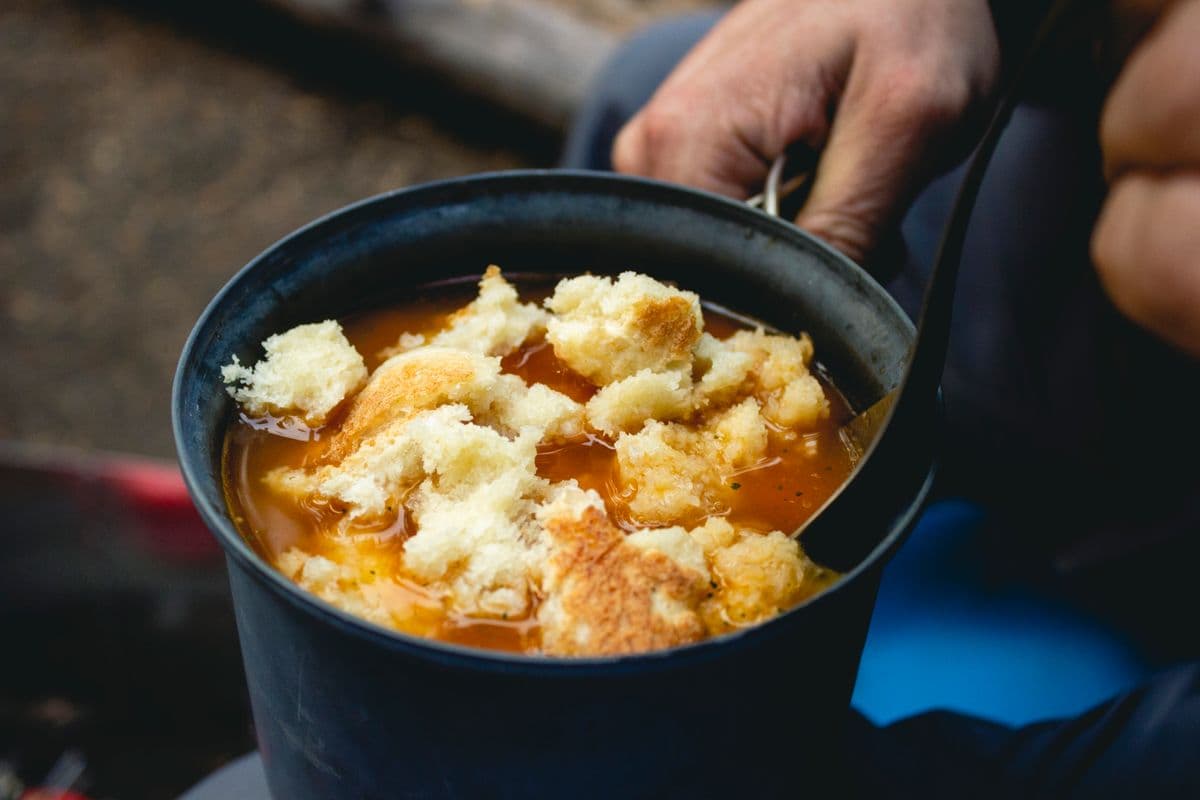
Plan camping food around two things: your cooking setup and how long you're out. Build the first day around your cooler (fresh food), then switch to shelf-stable and one-pot meals — oats and tortillas, pasta and couscous, cured meats and hard cheese, and freeze-dried dinners for backpacking. Pre-portion at home so there's less to carry and clean.
How to plan camping food
Good camp food is about logistics as much as recipes. A quick way to plan it:
- Start with your cooking setup — open fire, single burner, or two-burner stove decides what's realistic.
- Map every meal — breakfast, lunch, dinner, and snacks for each day, so nothing's improvised at camp. Our camping food list lays out what to bring by category.
- Cook the perishable food first — fresh ingredients on night one while the cooler is coldest, shelf-stable and one-pot meals later.
- Prep at home — pre-portion dry goods, chop veg, and make meals ahead so there's less to carry and clean.
For a worked example, follow our simple weekend camping menu.
Breakfast, dinner & no-cook ideas
Once the plan's set, fill it in by meal. Start the day with easy camping breakfast ideas, keep dinners simple with one-pot and foil-packet recipes, and keep a stove-free fallback with no-cook meals for the nights you arrive late and tired.
Meals by camping style
Car camping
Weight doesn't matter, so eat well: a good cooler, real ingredients, and a two-burner stove open up everything from fry-ups to one-pan pasta.
Backpacking
Every gram counts. Lean on calorie-dense, lightweight food — oats, nut butters, dried meals, and freeze-dried dinners you just add water to.
Family & group camping
Cook once, feed everyone: big one-pot meals, build-your-own foil packets, and make-ahead freezer meals scale best and keep the washing-up down.
Keeping camping food cold & safe
Most camp-food problems are really cooler problems. Freeze what you can before you leave (frozen meals double as ice), keep the cooler shut and shaded, and eat the most perishable food in the first day or two. A quality cooler buys you days — see our best coolers and how to pack one in the car camping guide.
Meal ideas & researched picks
Best freeze-dried camping food, compared
Freeze-dried vs dehydrated food
Easy no-cook camping meals
Camping food list: what to bring
Easy camping breakfast ideas
Easy camping dinner ideas
Easy tent camping recipes
Make-ahead camping meals
A simple weekend camping menu
FAQ
What camping food doesn't need refrigeration?
Plenty: oats, nut butters, tortillas, hard cheeses, cured meats, dried fruit, trail mix, instant noodles, couscous, and freeze-dried meals. Plan the first day around your cooler and the rest around shelf-stable food.
How do I plan camping meals?
Work backward from your cooking setup and trip length. Map breakfast, lunch, dinner, and snacks per day, lean on one-pot dinners, and pre-portion ingredients at home so there's less to carry and less to clean.
Is freeze-dried camping food worth it?
For backpacking, yes — it's light, fast, and keeps for years. For car camping where weight doesn't matter, real ingredients are cheaper and tastier, with freeze-dried as a convenient backup.
How do you keep food cold while camping?
Freeze meals and drinks solid before you leave so they act as ice, line the cooler with frozen bottles, keep it shut and in the shade, and eat perishable food in the first day or two. A well-insulated cooler can hold safe temperatures for several days.
Researched and maintained by Maya Ellison. See how we choose.