For a family of four, buy a 6-person tent with near-vertical walls, full standing height, a room divider, and a full-coverage fly rated 3,000mm+ on the floor. Cabin tents give the most space; tunnel tents balance space and weather. Always size up by two — capacity ratings assume no gear.
The golden rule: size up
The single biggest family-tent mistake is buying to the headcount. Capacity numbers assume sleepers packed side by side with zero gear. Add two to your group for comfort and storage. Anyone in the group over six feet? Check floor length against our tents for tall people guide. New to tents generally? Start with how to choose a tent.
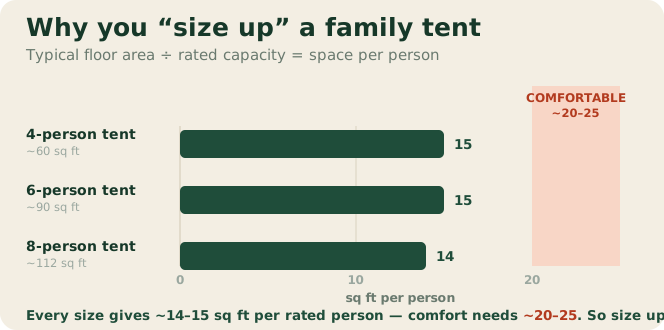
Read the chart and the rule writes itself: whatever the label, a family tent gives each rated person only about 14–15 sq ft — roughly a sleeping pad with no room for anything else. Comfortable living space is closer to 20–25 sq ft each, so a family of four is happiest in a 6-person tent, not a 4. (Figures are typical published floor areas; exact specs vary by model.)
What to look for
- Real living space — near-vertical walls and standing height, not just floor area.
- Rooms & dividers — separate sleeping pods and a living area for longer trips.
- Weather protection — full-coverage fly, 3,000mm+ floor, taped seams.
- Ventilation — big tents breed condensation; look for vents and mesh.
- Pitch — color-coded poles or an instant frame help when kids are “helping.”
Our picks by use
| Tent | Best for | Stands out for | Price |
|---|---|---|---|
| Coleman WeatherMaster 6 | Overall | Roomy cabin, strong rain performance | $$ |
| Coleman Sundome 6 | Value | Easy dome pitch, solid weatherproofing | $ |
| CORE 9-Person Instant Cabin | Biggest / livable | Stand-up height, 60-second pitch | $$ |
| Marmot Limestone 6P | Weather | Sturdier, better-sealed build | $$$ |
A roomy 6-person cabin with near-vertical walls, a hinged door, and strong rain performance — space for a family of four plus gear.
- Roomy cabin walls
- Strong rain performance
- Heavy, slower pitch
The dependable budget pick: an easy dome pitch and solid weatherproofing for far less than the cabins.
- Easy dome pitch
- Solid weatherproofing
- Great price
- Less standing room
Stand-up height throughout and a 60-second instant pitch — basecamp room for big families and longer stays.
- Stand-up height throughout
- 60-second pitch
- Large and heavy packed
A sturdier, better-sealed build that handles wind and rain better than budget cabins.
- Sturdier build
- Better sealed for weather
- Pricier than budget cabins
Make it last
Big tents are an investment — care for them: here's how to waterproof a tent and how to clean one without wrecking the coating. And if you pitch once and stay a week, standing-height canvas comfort might suit you better — see our yurt tent guide. Camping with the kids? For a rainy-day project, try making a DIY kids' tent. Smaller crew? See the best 4-person tents.
FAQ
What size tent does a family of four need?
Size up. A family of four is most comfortable in a 6-person tent, which leaves room for gear, a little floor space, and the reality that nobody sleeps shoulder-to-shoulder. A '4-person' tent fits four sleepers and nothing else.
Cabin tent or tunnel tent for families?
Cabin tents have near-vertical walls and the most living space and headroom but catch wind. Tunnel tents balance space and weather stability well. For exposed or windy sites, a tunnel or dome handles weather better than a tall cabin.
What should I look for in a family tent?
Real standing height, near-vertical walls for usable space, a room divider for privacy, a full-coverage fly with a 3,000mm+ floor, decent ventilation to fight condensation, and a pitch you can manage with kids underfoot.
Are instant/pop-up family tents any good?
They're brilliant for speed, but the biggest instant tents are heavy and less weatherproof than pole or tunnel tents. Great for fair-weather festivals and short trips; less so for a wet week away.