
To waterproof a tent: clean and dry it, refresh the DWR spray on the outer fly, seam-seal the stitching, and renew the urethane coating on the fly and floor — then let it cure 12–24 hours and hose-test it. Most tents need this every 12–24 months, or whenever water stops beading on the fly.
Why tents leak in the first place
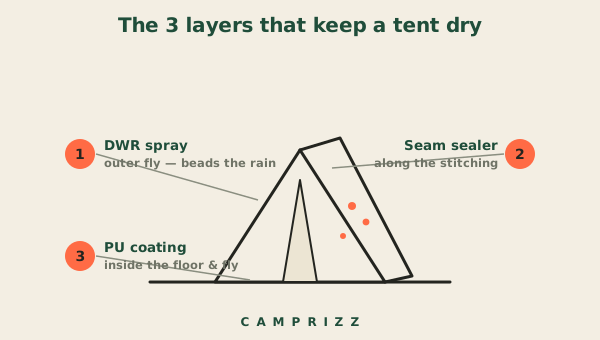
A tent keeps you dry with three separate layers, and a leak is almost always one of them failing — not the whole tent “wearing out.” Knowing which one saves you time and money:
- The DWR — the outer water-repellent finish that makes rain bead. Sun and washing wear it off first (and it's now shifting to PFAS-free formulas that reproof a little more often).
- The seams — every stitch is a needle hole; tape and sealant cover them, and both age out.
- The urethane (PU) coating — the inner barrier on the fly and floor. When it flakes or gets tacky, water soaks straight through.
Not sure it's even a leak? If the inside is damp but it didn't rain, that's usually condensation, not a leak — and it needs a completely different fix.
How to tell your tent needs reproofing
Do the bead test: spray the dry fly with water. If it beads up and rolls off, your waterproofing is fine. If it soaks in and darkens the fabric, the DWR is gone. Also check for flaking or sticky coating inside the fly and floor, and run a hand along the seams after a rinse to feel for seepage.
What you'll need
- +Tent-safe DWR / water-repellent spray — for the outer fly. See options →
- +Seam sealer matched to your fabric (silicone vs. PU). See options →
- +Tent floor / fly coating — to renew the urethane layer. See options →
- +Tech-fabric wash, a sponge, a soft brush, and rubbing alcohol
How to waterproof a tent, step by step
Clean and dry the tent first
Sealant and DWR won't bond to a dirty fly. Pitch the tent, brush off grit, and sponge the fly and floor with lukewarm water and a tech-fabric wash (never detergent — it strips coatings). Rinse and let it dry fully.
If there's mould or a musty smell, deal with that now — see our guide to cleaning a tent — because reproofing over mildew just seals it in.
Refresh the DWR on the flysheet
The DWR (durable water repellent) is what makes rain bead and roll off. With the fly clean and still slightly damp, spray an even coat of tent-safe water repellent over the outer surface, wipe off any excess, and let it cure.
This is the layer that fails first and the one most "my tent is leaking" problems trace back to.
Seam-seal the stitching
Every seam is a row of needle holes. Working on the inside (coated side) of the fly, wipe the seams with a rag and a little rubbing alcohol, then brush a thin, even coat of seam sealer along the stitching. Use the sealer matched to your fabric — most modern tents are silicone-treated nylon or polyester.
Don't glob it on; thin and complete beats thick and patchy.
Renew the urethane coating on the floor and fly
The PU coating on the inside of the fly and the tent floor is the main moisture barrier. If it's flaking or feels tacky, gently remove the loose bits and brush on a fresh tent floor/fly sealant in thin strokes across the whole panel.
A worn floor coating is the usual reason you wake up in a puddle even when the fly looks fine.
Let everything cure — fully
Patience is the step people skip. Leave the tent pitched in a dry, ventilated spot for 12–24 hours so the sealants cure hard. Packing it away early is how you glue the walls together.
Test it before you trust it
Re-pitch and spray the fly with a hose. Water should bead and run off; inside should stay dry. Watch the seams and the floor corners. Found a spot you missed? Touch it up and cure again — far better than finding it at midnight in a storm.
“Nine times out of ten, a ‘leaking’ tent just needs its DWR refreshed and its seams resealed — not replacing.”
How often to reproof (and how to make it last)
Plan on every 12–24 months with regular use. You'll stretch it a lot by doing three things: always dry your tent fully before storing it, keep it out of constant direct sun when you can (UV is the real killer), and never machine-wash it. A footprint under the floor also takes the abrasion that wears the coating — see our full tents guide for more on footprints and care.
Common mistakes to avoid
- Using household detergent — it strips the DWR you're trying to protect.
- Reproofing over a dirty or mouldy fly, which seals the problem in.
- Globbing seam sealer on thick — thin, complete coats bond better.
- Packing up before it cures, gluing the walls together.
- Skipping the hose test, then discovering the gap mid-storm.
FAQ
How often should you waterproof a tent?
Most tents need re-waterproofing every 12–24 months, depending on use and sun exposure. If water stops beading on the fly, or you see flaking coating or damp seams, it's time — regardless of the calendar.
Why does my tent leak even though it looks fine?
The three usual culprits are a worn-out DWR (rain soaks in instead of beading), unsealed or failing seams (water wicks through the stitch holes), and a degraded floor/fly urethane coating. A tent can look perfect and still fail at any of these three layers.
Can you waterproof a tent in the rain?
No. DWR sprays and seam sealers need a clean, dry (or only slightly damp) surface and dry, ventilated curing time to bond. Applying in the rain just washes the product off. Do it at home before your trip.
What's the best tent waterproofing spray?
Match the product to the job: a tent-safe DWR spray for the outer fly, a fabric-specific seam sealer for the stitching, and a floor/fly coating for the inside. The exact best pick depends on your tent's fabric — read the label for silicone-treated vs. PU-coated nylon or polyester.
How do you waterproof a new tent?
New tents usually arrive sealed, but factory seam tape and coatings vary. Pitch it, do the hose test, and seam-seal any spots that seep. A light DWR top-up before a first big trip never hurts.