To set up a tent: find flat, clear, slightly raised ground; lay the footprint; assemble and clip the poles into a free-standing frame; stake the corners taut at a 45° angle; then drape and tension the rainfly so it sits off the inner wall. Always pitch the fly, even on a clear night.
What you need first
Your tent, its poles and stakes, the footprint, and a small mallet for hard ground. New tent? Run through it once in the backyard — the worst time to learn the steps is in the rain. (And here's how to keep it waterproof once it's up.) Still choosing one? Compare tent types and our best 2-person tents.
How to set up a tent, step by step
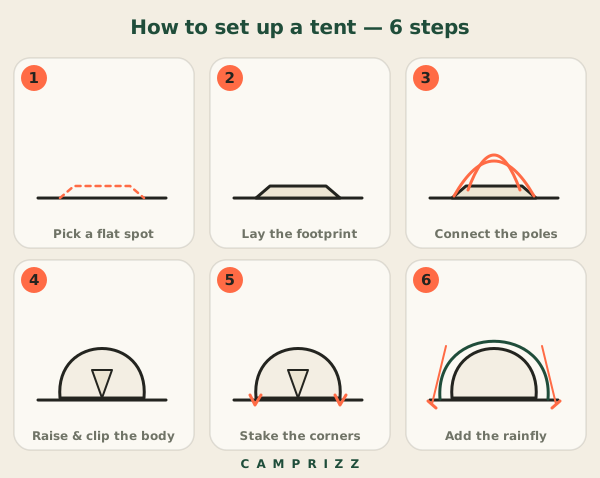
Pick and prep the spot
Choose flat ground, slightly raised so water drains away, and clear every stick and stone — they're what you'll feel at 2am and what punctures a floor. Note the wind direction so you can pitch the smallest end into it.
Lay the footprint
Put your footprint (or ground sheet) down first, tucked so no edge sticks out past the tent — an exposed edge funnels rain under the floor. Orient it for your door and the view.
Assemble and connect the poles
Click the shock-corded poles together fully (don't let them snap — feed them), then thread or clip them to the tent body to form the frame. Most modern tents clip, which is faster and kinder to the poles.
Raise the body and clip it up
Stand the poles into their grommets at each corner so the tent pops into shape, then attach the remaining clips or sleeves. It should already be free-standing at this point.
Stake it out
Push stakes through the corner loops at a 45° angle away from the tent and pull the floor taut as you go. Taut corners are what keep it from flapping and sagging overnight.
Add the rainfly and tension it
Drape the rainfly over the top, matching the doors, clip it to the corners, and tension the guy lines so the fly sits off the inner wall (that gap is what stops condensation dripping on you). Even on a clear night, fly on — weather changes.
“A tent that's pitched taut and squared-up barely flaps all night. A loose one sounds like a flag in a storm.”
Common mistakes to avoid
- Pitching on a low spot where rain pools under the floor.
- Leaving the footprint edge sticking out past the tent (it funnels water in).
- Snapping shock-corded poles together — feed them so they last.
- Skipping the fly on a “clear” night, then waking up to dew or rain.
- Loose corners — taut floor and guy lines are what keep it quiet and dry.
- A slack fly — pitch it taut so it sheds condensation instead of dripping it on you.
FAQ
How long does it take to set up a tent?
A 2-person tent takes about 5–10 minutes once you've done it once or twice. Larger family tents take 15–25. The first time is always slower, so practice in the backyard before your trip.
Do you stake the tent or assemble poles first?
Poles first. Build the free-standing body with poles, get it into shape, then stake the corners and add the fly. Staking first makes it hard to square everything up.
How do you set up a tent alone?
Most freestanding tents are designed for one person: build the frame flat on the ground, raise it with the poles, then stake and fly at your own pace. On a windy day, stake one corner first so it can't blow away.
How do you pitch a tent on hard ground?
Use a small mallet or rock to drive stakes, switch to tougher steel or screw-in stakes, or guy out to nearby rocks and logs if stakes won't hold. A freestanding tent will stand without stakes, but always anchor the fly.