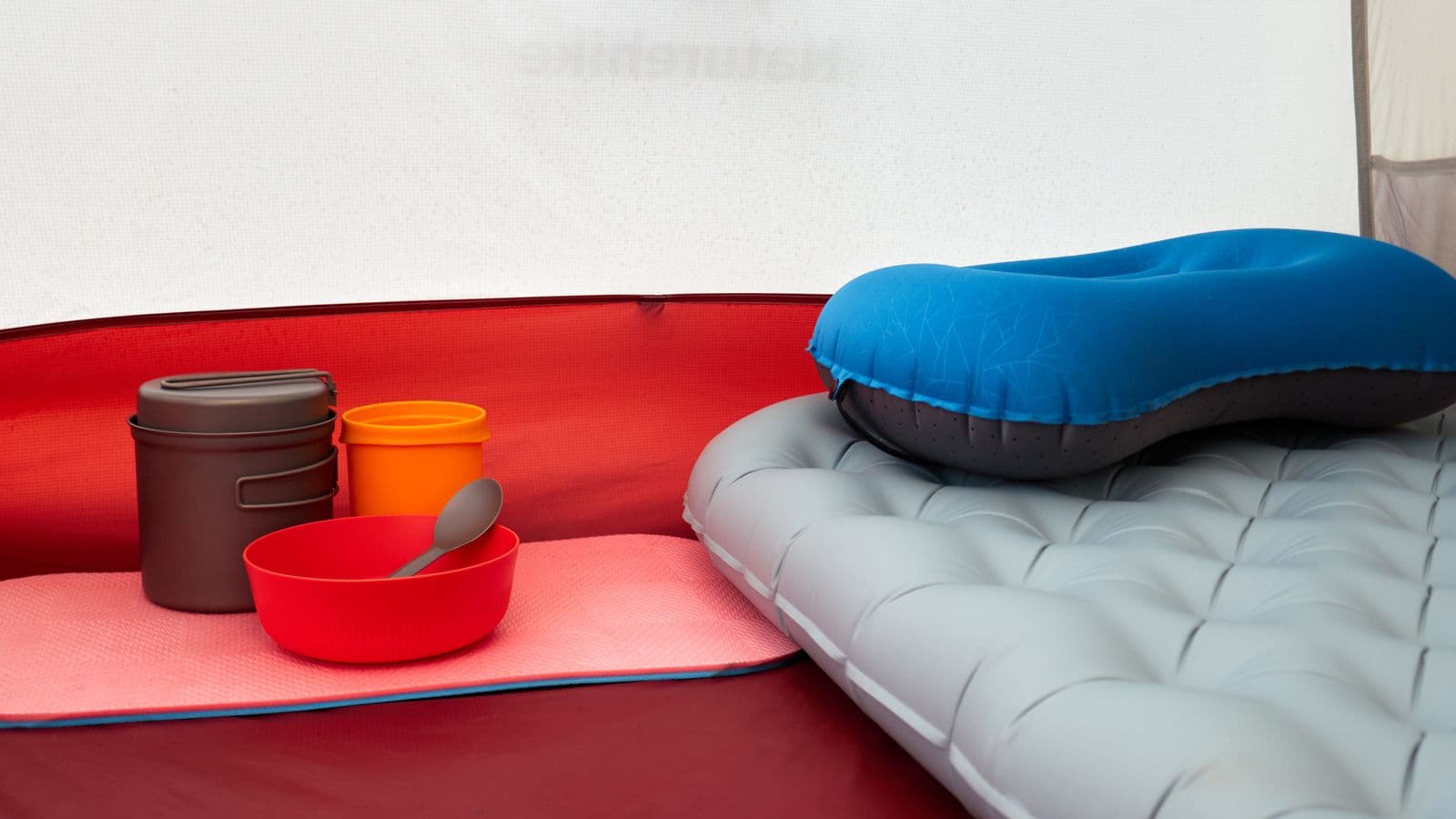
Choose an air mattress for plush, bed-like comfort on warm-weather car-camping trips. Choose a sleeping pad for warmth, low weight, and small pack size — it's the better all-round and cold-weather option, and the only real choice for backpacking. The big catch: air mattresses are cold (R ~1–2), because the air inside circulates and steals your heat.
They look like they do the same job, but they solve different problems: an air mattress maximizes comfort, a sleeping pad maximizes warmth and portability. Getting this wrong is a classic cold-night mistake. New to sleep systems? Start with how to choose camping gear.
Air mattress vs sleeping pad, side by side
| Factor | Air mattress | Sleeping pad |
|---|---|---|
| Comfort | Plush, tall, bed-like | Firmer, closer to the ground |
| Warmth | Cold — air circulates (R ~1–2) | Warm — insulated (R 2–7+) |
| Weight & pack size | Heavy, bulky | Light, packs small |
| Setup | Needs a pump, minutes to inflate | Self-inflating or a few breaths |
| Best use | Car & family camping in warm weather | Backpacking, cold weather, any trip |
| Durability risk | Punctures end the night | Foam backups possible; more forgiving |
| Price | $–$$ | $–$$$ |
Air mattresses
An air mattress (air bed) is tall and plush — the closest thing to your bed at home, which is why families and car campers love it. The trade-offs are real, though: it's cold (that big pocket of air carries heat away), heavy and bulky to pack, needs a pump, and a single puncture can end the night. It shines in warm weather when comfort is the whole point.
- Plush, tall, bed-like comfort
- Great for family and car camping
- Big surfaces for two people
- Cold — minimal insulation
- Heavy, bulky, needs a pump
- Punctures leave you on the ground
Best for: warm-weather car and family camping where comfort beats weight. See our best camping mattresses & air beds.
Sleeping pads
A sleeping pad is built around an R-value — insulation that blocks the cold ground — so it sleeps far warmer than an air bed despite being thinner. It's light, packs small, and often self-inflates. Modern insulated pads are comfortable for most sleepers, side sleepers included. It's the versatile choice for any season and the only sensible option if you carry your gear.
- Warm — insulated for cold ground
- Light and packs small
- Works in every season
- Firmer, lower than an air bed
- Premium insulated pads cost more
Best for: backpacking, cold weather, and anyone who wants one do-it-all option. See our best sleeping pads, and whether air or foam suits you.
How we compare: the consistent, published characteristics of each type and the patterns across many owner reviews — not lab testing. See how we choose.
So, which should you choose?
Warm-weather car camping where comfort rules? An air mattress — just add a layer underneath if it turns cool. Backpacking, cold nights, or want one option for everything? A sleeping pad. Want both comfort and warmth for car camping? A thick self-inflating mat splits the difference — the pick of our camping mattress guide. Whichever you choose, match its R-value to the season.
FAQ
Is an air mattress or sleeping pad better for camping?
It depends on how you camp. An air mattress is more comfortable and bed-like for warm-weather car camping, but it's cold, heavy, and bulky. A sleeping pad is warmer (it's insulated), lighter, and packs small, which makes it the better all-round and cold-weather choice — and the only realistic option for backpacking.
Why is an air mattress so cold to sleep on?
Because it's just a big chamber of air with no insulation, and that air circulates all night, carrying your body heat down to the cold ground. Most air mattresses have an R-value of only 1–2, fine above about 55°F but cold below it. Add a foam pad or blanket underneath, or use an insulated pad instead.
Can you use an air mattress for cold-weather camping?
Not on its own — it'll leave you cold. If you must, put an insulated sleeping pad or a closed-cell foam pad on top of (or under) it to add an R-value barrier, and use a warmer sleeping bag. For genuine cold, an insulated sleeping pad is the simpler, warmer answer.
Are sleeping pads comfortable enough?
Modern insulated pads are 3–4 inches thick and comfortable for most sleepers, including side sleepers — a big step up from the thin foam mats of the past. They won't feel exactly like a home bed the way a tall air mattress can, but they trade a little plushness for far more warmth and packability.
What about a self-inflating camping mattress — is that a pad or a mattress?
It's the middle ground: a self-inflating mat has foam inside like a pad (so it's insulated and warm) but is thick and comfortable like a mattress. For car camping it's often the best of both worlds. See our best camping mattress picks for the top self-inflating options.