To travel with a drone: check the destination's drone laws weeks ahead, register the drone (with the FAA if required, and with customs as a personal effect), and pack it and its spare batteries in your carry-on — never checked luggage. Keep batteries under 100Wh with the terminals protected, carry your paperwork, and fly responsibly when you arrive.
Bringing a drone abroad is absolutely worth it — and entirely manageable once you know the three things that trip people up: airline battery rules, customs paperwork, and local laws. Get those right and the rest is just careful packing. This guide walks through it step by step; for the legal side, pair it with our drone laws for travelers explainer.
How to travel with a drone, step by step
Check the destination's drone rules first
Weeks before you book activities, look up the country's drone laws on its official aviation authority website — not a forum or an old blog. Some places require permits or registration before arrival, some restrict where you can fly, and a few ban drones entirely. Give yourself 4–6 weeks in case a permit is involved.
Register and document your drone
Make sure your drone is registered as required at home (in the US, most drones over 250g must be registered with the FAA). Then register it with customs as a personal effect before you leave — US travelers can use CBP Form 4457 — so there's no question at the border about whether you bought it abroad.
Pack the batteries the right way
This is the big one: spare lithium batteries must travel in your carry-on, never checked luggage. Most airlines cap batteries at 100Wh (drone batteries are usually fine); 100–160Wh needs airline approval, and anything over 160Wh isn't allowed. Tape over or cap the terminals, and carry them in a fireproof LiPo bag.
Carry the drone on, and protect it
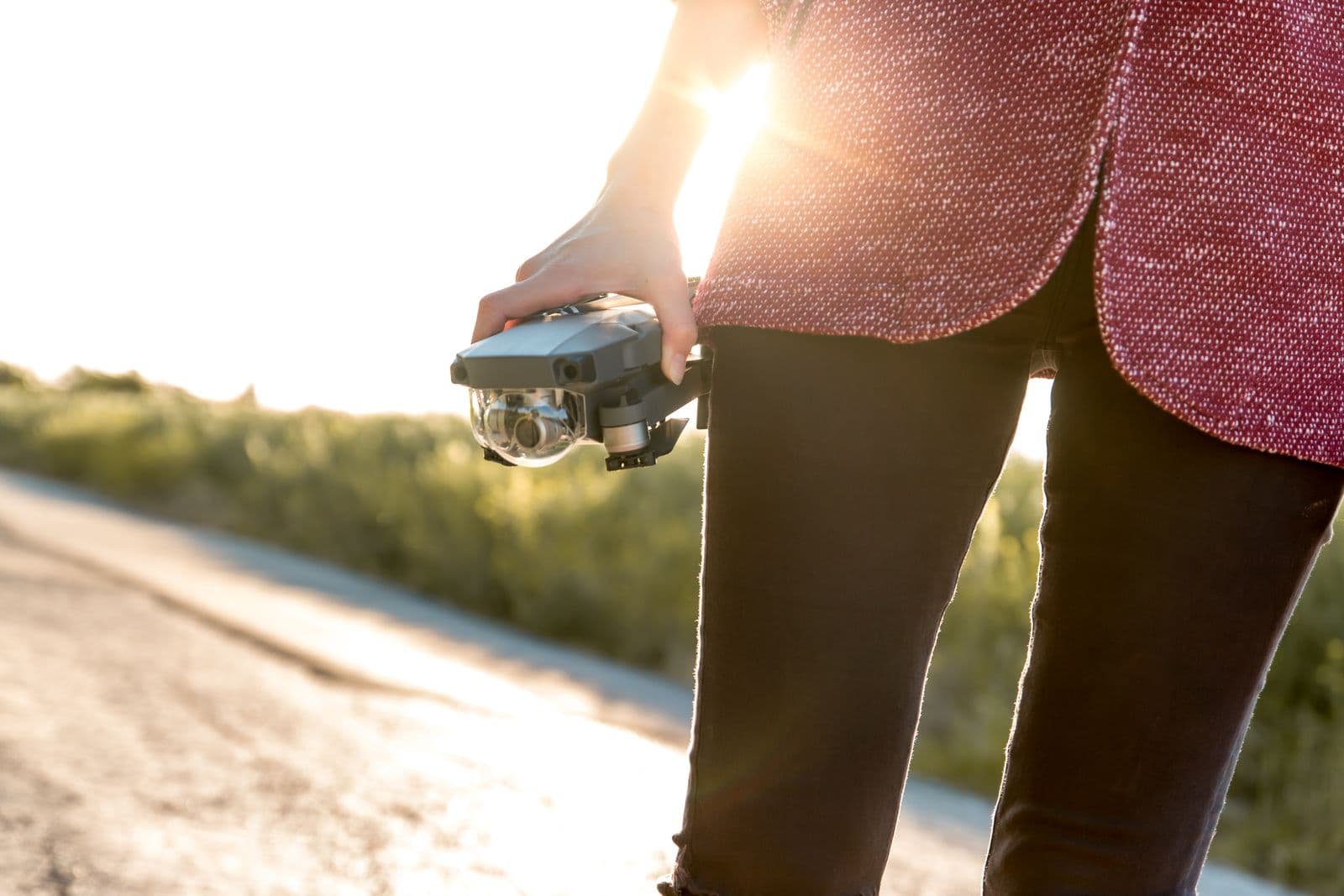
Pack the drone itself in your carry-on too — checked bags get thrown around and lost. Use a hard case or a padded cube, fold and secure the props, and protect the gimbal with its guard. Bring it to discharged-but-not-empty storage levels for the flight if your batteries support it.
Move smoothly through security
Drones go through the X-ray like any electronics — take the drone and batteries out of your bag if asked, and be ready to explain what they are. A printout of your registration and a calm 'it's a camera drone' goes a long way. Rules can differ by airport, so allow extra time.
Fly responsibly when you arrive
Even where drones are legal, fly considerately: keep it in sight, away from airports, crowds, and wildlife, and respect no-fly zones and people's privacy. A single reckless flight is how destinations end up banning them. When in doubt, don't fly — ask locally or check the authority's map first.
Not legal advice: airline and country rules change often and vary widely. This is general, research-driven guidance — always confirm with your airline and the destination's official aviation authority before you fly. See how we choose.
The gear that helps
A hard case, a fireproof battery bag, and a reliable power bank to recharge controllers make drone travel far smoother — and good packing organization keeps the small parts together. Building a carry-on kit? See our carry-on essentials.
FAQ
Can you bring a drone on a plane?
Yes — in almost all cases a drone travels in your carry-on, and its spare lithium batteries must travel in the cabin too, never in checked luggage. The drone's built-in or spare batteries usually fall under the 100Wh limit airlines allow. Always check your specific airline's policy, since the details vary.
Can drone batteries go in checked luggage?
No. Spare lithium batteries are prohibited in checked baggage on passenger flights and must be carried in the cabin, where a fire can be dealt with. Protect the terminals from short circuits with tape or caps, and ideally carry them in a fireproof battery bag. Batteries over 160Wh aren't allowed on passenger aircraft at all.
Do I need to register my drone to travel with it?
You should register it at home as your country requires (in the US, most drones over 250g), and it's wise to register it with customs as a personal effect — CBP Form 4457 for US travelers — so you can prove you owned it before the trip. Your destination may also require its own registration or permit before you fly there.
How do I pack a drone for travel?
Put the drone and all batteries in your carry-on, in a hard case or padded cube. Fold and secure the propellers, fit the gimbal guard, and tape the battery terminals. Keep your registration paperwork handy. Never check the drone or its batteries — checked bags are rougher, get lost, and can't carry spare lithium cells anyway.
Can I fly my drone in another country?
Sometimes freely, sometimes only with a permit, and sometimes not at all — there's no universal rule. Check the destination's official aviation authority before you travel, since flying without permission can mean fines or confiscation. See our guide to drone laws for travelers for what to look for.