Two-person backpacking tents cluster around 28–34 sq ft of floor, 40–42 in peak height, and 3–5 lb packed; six-to-eight-person family tents run roughly 83–112 sq ft with 59–84 in peaks. Use the tables below to compare specific models on the numbers that matter — weight if you carry it, floor area and peak height if you live in it — then jump to our researched picks for your category.
The fastest way to choose a tent is to compare the few numbers that actually decide the experience — and tent listings rarely sit side by side. We pulled the published specs for 13 popular models into two tables: one for backpacking tents (where weight rules) and one for family/car-camping tents (where space rules). New to the specs? Start with how to choose a tent or compare tent types.
Backpacking tents (1–2 person)
For tents you carry, the trade-off is weight vs space vs price. Premium freestanding tents are lightest for their room; budget tents save money with a single door and heavier poles.
| Tent | Sleeps | Packed weight | Floor area | Peak height | Doors | Price |
|---|---|---|---|---|---|---|
| Big Agnes Copper Spur HV UL2 | 2 | ~3 lb | 29 sq ft | 40 in | 2 | $$$ |
| NEMO Dagger OSMO 2P | 2 | 3 lb 6 oz | 30.6 sq ft | 42 in | 2 | $$$ |
| MSR Hubba Hubba 2 | 2 | 3 lb 15 oz | 32 sq ft | 40 in | 2 | $$$ |
| REI Co-op Half Dome SL 2+ | 2 | 3 lb 15 oz | 33.8 sq ft | 42 in | 2 | $$ |
| Marmot Tungsten 2P | 2 | ~5 lb | 30.1 sq ft | 42 in | 2 | $$ |
| Naturehike Cloud-Up 2 | 2 | ~3 lb | 27.9 sq ft | 40 in | 1 | $ |
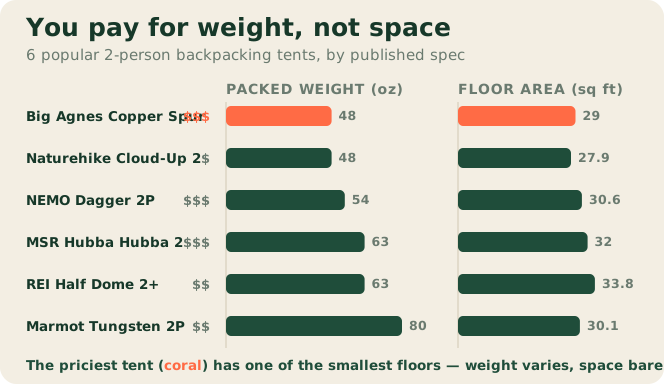
The pattern that jumps out: across these tents, price buys weight savings, not floor space. Floor area barely moves (27.9–33.8 sq ft) while packed weight ranges from 48 to 80 oz and tracks price — the most expensive tent here, the Big Agnes Copper Spur (29 sq ft), actually has one of the smallest floors:
Shopping this category? See our best 2-person tents and the 2-person vs 3-person sizing guide.
Family & car-camping tents (4–8 person)
When you drive to camp, weight stops mattering and floor area plus peak height take over. Cabin-style tents (taller, near-vertical walls) feel roomiest; dome tents trade height for wind stability.
| Tent | Sleeps | Floor area | Peak height | Price |
|---|---|---|---|---|
| Coleman Sundome 4 | 4 | 63 sq ft | 59 in | $ |
| CORE 6-Person Dome | 6 | 90 sq ft | 66 in | $ |
| Coleman Skydome 6 | 6 | 85 sq ft | 72 in | $$ |
| Kelty Wireless 6 | 6 | 86.9 sq ft | 76 in | $$ |
| Eureka Copper Canyon LX 6 | 6 | 100 sq ft | 84 in | $$ |
| REI Co-op Wonderland 6 | 6 | 83.3 sq ft | 75 in | $$$ |
| Coleman Montana 8 | 8 | 112 sq ft | 74 in | $$ |
Shopping this category? See our best family tents, and for tall campers, the best tents for tall people.
How to read these numbers
- Packed weight — matters only if you carry the tent. Brands quote “minimum” (tent, fly, poles) and “packaged” (everything in the box) weights differently, so treat these as approximate.
- Floor area — usable sleeping footprint. ~28–34 sq ft fits two pads; 80+ sq ft is family territory.
- Peak height — ~40–42 in is sit-up-only (backpacking); ~72 in (6 ft) and up lets most people stand.
- Doors — two doors mean nobody climbs over anyone at night; one door saves weight and money.
- Price — shown as bands ($ budget · $$ mid · $$$ premium) because actual prices change constantly.
How we compiled this (and an honest caveat): these are manufacturer-published specifications, gathered in June 2026 and cross-checked against retailer listings (REI, manufacturer sites, and major gear retailers) where possible. We did not lab-test these tents — this is a published-spec reference, not a hands-on test. Tents come in variants and specs change between model years, so always confirm the current spec on the exact model before buying. See how we choose.
FAQ
How much do backpacking tents weigh?
Most popular two-person backpacking tents land between about 3 and 5 pounds packed. Premium freestanding models like the Big Agnes Copper Spur and MSR Hubba Hubba sit near 3–4 lb, value options like the Marmot Tungsten run closer to 5 lb, and budget ultralight tents like the Naturehike Cloud-Up come in around 3 lb by using a single door and lighter materials.
How big is a 2-person tent?
Two-person backpacking tents typically have a floor area of about 28–34 square feet and a peak height around 40–42 inches — enough for two sleeping pads side by side with little spare room. They're sized for sleeping, not living, so gear usually goes in the vestibule rather than inside.
How much floor space does a 6-person family tent have?
Six-person family tents in this comparison range from roughly 83 to 100 square feet of floor area, with peak heights of about 66–84 inches. Cabin-style tents like the Eureka Copper Canyon LX maximize headroom with near-vertical walls (84 in / 7 ft), while dome tents like the Coleman Skydome trade some height for better wind performance.
What's a good peak height for standing up in a tent?
To stand fully upright you generally need a peak height of about 72 inches (6 ft) or more, which is why cabin-style family tents (72–84 in here) work for changing and moving around, while backpacking tents (40–42 in) are sit-up-only by design to save weight.
Are these tent specs accurate?
These are manufacturer-published figures compiled in June 2026 and cross-checked against retailer listings where possible. Tents come in variants and specs change between model years, so always confirm the current spec on the exact model before you buy — and treat 'packed weight' as approximate, since brands measure it differently (minimum vs packaged weight).