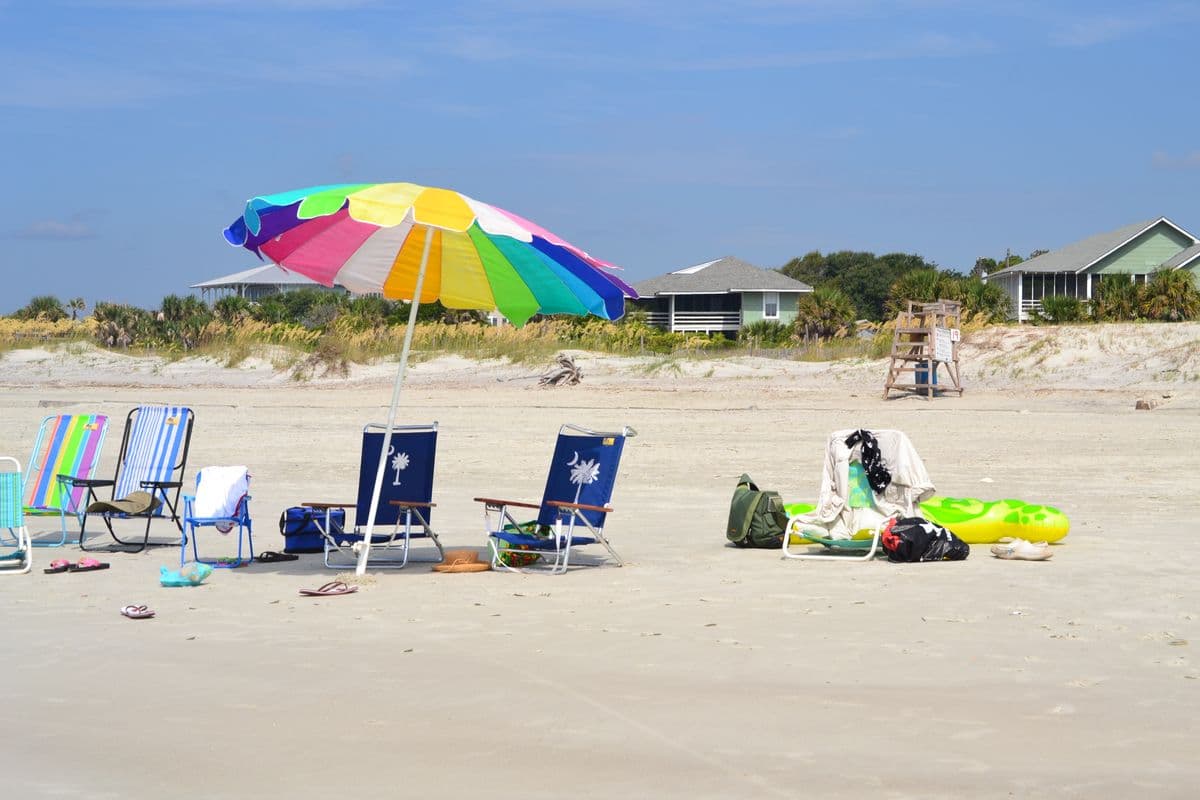
A good beach tent has a UPF 50+ canopy, real ventilation, and a serious anchoring system (sand pockets plus guy lines). Pop-ups are easiest to carry but blow away in wind; anchored cabanas hold firm. Match the choice to how breezy your beach gets.
What to look for in a beach tent
- UPF 50+ fabric with deep sides or a partial back — open canopies let in reflected UV.
- Ventilation — mesh windows stop it turning into an oven.
- Anchoring — sand pockets, stakes, and guy lines; this is what keeps it down.
- Setup speed vs stability — pop-up for convenience, cabana for wind.
- Packed size & weight — you're carrying it across sand with everything else.
Our picks by use
| Shelter | Best for | Stands out for | Price |
|---|---|---|---|
| Pacific Breeze Easy Up | Sun protection | UPF 50+ pop-up cabana, good airflow | $ |
| Sport-Brella XL | Wind | Anchored, vented, holds in a breeze | $ |
| Neso Grande | Families | Large stable shade sail, sand pockets | $$ |
A UPF 50+ pop-up cabana with deep shade and good airflow — the popular all-rounder.
- UPF 50+ shade
- Good airflow
- Needs staking in wind
An anchored, vented canopy that holds firm in a breeze where light pop-ups cartwheel away.
- Holds firm in wind
- Vented panels
- Less enclosed shade
A large, stable shade sail with sand-pocket corners — big enough for the whole family.
- Large stable shade
- Sand-pocket anchors
- Needs anchoring technique
FAQ
How do you anchor a beach tent so it doesn't blow away?
Fill the built-in sand pockets, bury the anchors, and add guy lines to deadman anchors (a bag of sand or a buried towel). Pitch the lowest, most closed side into the wind. This is the single biggest difference between a great beach day and chasing your tent down the shore.
What UPF rating do I need for a beach tent?
Look for UPF 50+, which blocks about 98% of UV. Pair it with deeper sides or a partial back panel — an open canopy still lets in a lot of reflected sun off the sand and water.
Pop-up beach tent or cabana?
Pop-ups are fastest and most portable but the worst in wind. Cabanas and anchored shelters are sturdier and shadier but take longer to set up. Windy coast? Go anchored.
Are beach tents good for camping overnight?
Most aren't — they're sun-and-wind shade, not waterproof sleeping shelters. For overnight, choose a proper camping tent.
Want a fast option? Many beach shelters are pop-up tents. New to all this? See how to choose a tent, or compare every tent type.