Pack camping food by meal: breakfast (oats, eggs, bacon, bread), lunch and dinner (tortillas, pasta, rice, ground meat or chicken for day one, then canned and pouched proteins), plus ready-to-eat backups, snacks, and pantry staples like oil, salt, and spices. Plan fresh food for the first day around your cooler, then lean on shelf-stable and one-pot meals. Aim for roughly 1.5–2.5 lbs of food per person per day, and always bring one spare dinner.
The trick to camp food isn't recipes — it's the packing list. Map every meal, lean on food that survives without a fridge, and keep a no-cook fallback for the night you arrive late. Here's the whole list by category, then how much to bring. New to planning meals? Start with our guide to camping food.
The camping food list, by category
Work down each group and take what fits your trip. Fresh items (meat, dairy, cut veg) go in the cooler for day one; everything else is shelf-stable.
Breakfast
- Instant oats or overnight oats (add milk powder or UHT)
- Pancake mix (just-add-water) + syrup
- Eggs (pre-cracked in a bottle for car camping) or a carton
- Bacon or breakfast sausage for the first morning
- Bread or bagels, nut butter, honey
- Coffee, tea, and powdered or UHT milk
Lunch & dinner
- Tortillas and wraps (pack flat, don't crush like bread)
- Pasta, instant rice, couscous, or instant noodles
- Ground meat or chicken thighs (forgiving over a fire) for day one
- Canned or pouched tuna, chicken, chili, and beans
- Hard cheese, cured meats (salami, pepperoni) — no fridge needed
- Pre-chopped onions, peppers, and potatoes for one-pan hashes
Ready-to-eat & no-prep
- Freeze-dried backpacking meals (just add hot water)
- Cup ramen and mac-and-cheese cups
- Ready-to-eat pouches (Indian meals, rice bowls, refried beans)
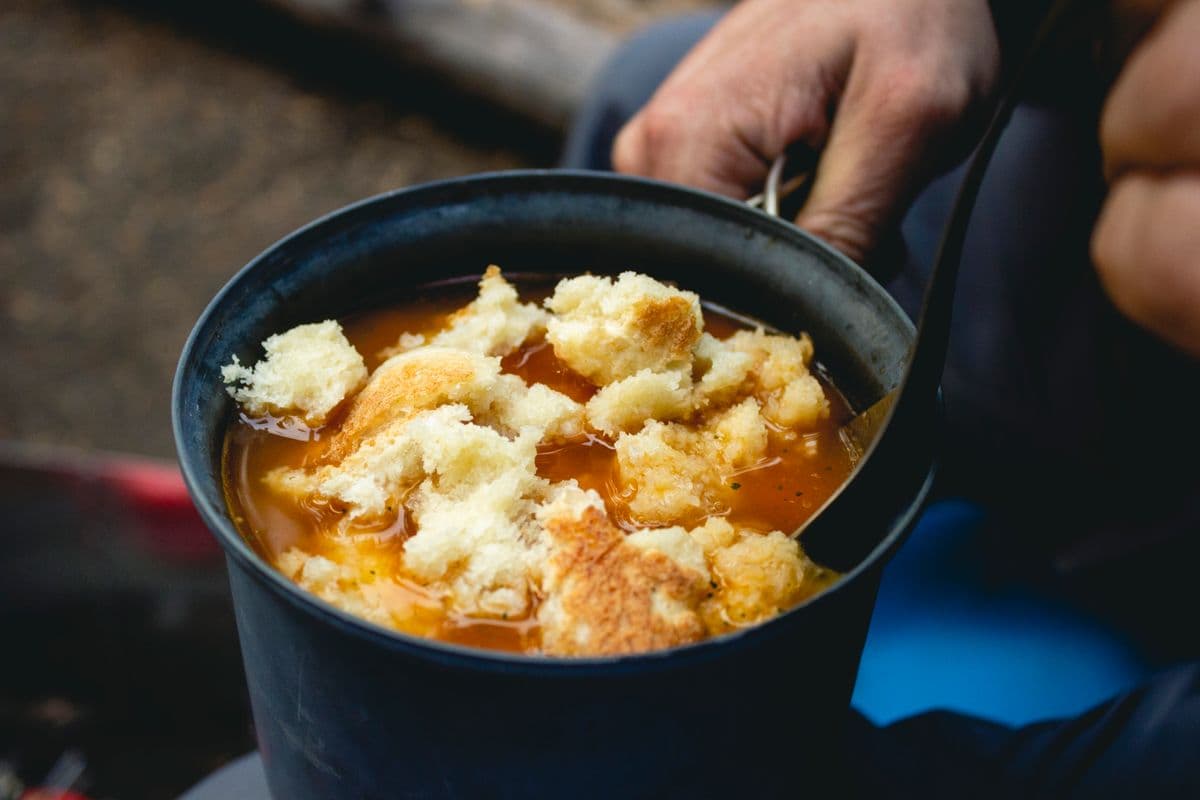
- Canned chili, soup, and baked beans (heat in the can)
- Peanut-butter crackers, tuna kits, and protein bars
Snacks
- Trail mix, nuts, and dried fruit
- Beef jerky (no cooking, no mess, no spoiling)
- Granola bars and energy bars
- Apples, oranges, and bananas — sturdy fresh fruit
- Chips, pretzels, and dark chocolate for morale
Pantry & don't-forget
- Cooking oil or butter, salt, pepper, and a spice mix
- Ketchup, mustard, and hot sauce (packets travel best)
- Foil, zip bags, and a trash bag
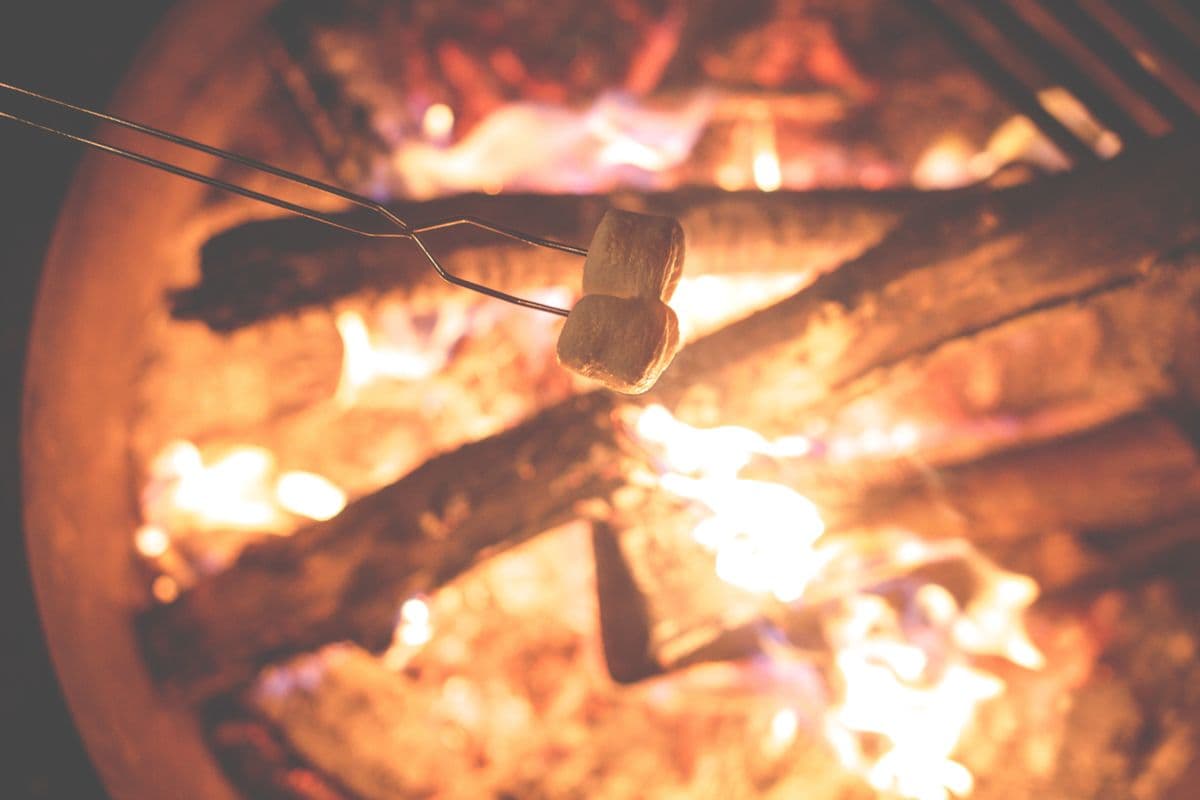
- Marshmallows, chocolate, and graham crackers for s'mores
- Plenty of water, plus electrolyte tabs or drink mix
Ready-to-eat & no-prep camping foods
Every trip needs a couple of meals that need zero effort. These are the premade and instant options worth stocking:
- Freeze-dried meals — lightest and longest-lasting; just add hot water. See our best freeze-dried camping food.
- Heat-in-the-can — chili, soup, and baked beans need only a fire and a spoon.
- Ready-to-eat pouches — rice bowls, curries, and refried beans that are shelf-stable and fast.
- Truly no-cook — tuna kits, jerky, and wraps for the nights the stove stays packed. Full day of ideas in our no-cook camping meals.
How much food to bring: a simple meal plan
Plan roughly 1.5–2.5 lbs of food per person per day — the higher end for active hiking, the lower for relaxed car camping — and map it meal by meal so nothing's improvised. A rough guide by trip length:
| Trip length | What to plan | Cold storage |
|---|---|---|
| Overnight (1 dinner + 1 breakfast) | 1 fresh dinner + snacks | Cooler optional |
| Weekend (2 nights) | 2 dinners, 2 breakfasts, 2 lunches, snacks | One cooler, fresh food day one |
| 3–4 days | Fresh food days 1–2, then shelf-stable & freeze-dried | Cooler + dry-goods box |
| 5+ days / backpacking | Mostly freeze-dried, oats, nut butter, jerky | Resupply or all shelf-stable |
For a worked two-night example, follow our simple weekend camping menu, and cut effort at camp by prepping make-ahead meals before you leave. Starting the day right? See easy camping breakfast ideas.
Keeping camping food cold & safe
Most camp-food problems are really cooler problems. Freeze what you can before you leave (frozen meals double as ice), keep the cooler shut and shaded, and eat the most perishable food in the first day or two. A quality cooler buys you days — see our best coolers and how to pack one in the car camping guide.
FAQ
What food should I bring camping?
Build the list around meals: breakfast (oats, eggs, bacon, bread), lunch and dinner (tortillas, pasta, rice, ground meat or chicken for day one, then canned and pouched proteins), plus ready-to-eat backups, snacks, and pantry staples like oil, salt, and spices. Plan fresh food for the first day around your cooler, then switch to shelf-stable food.
What camping food doesn't need refrigeration?
Oats, nut butters, tortillas and bread, hard cheeses, cured meats, crackers, tuna and chicken pouches, canned chili and beans, instant noodles, rice, couscous, dried fruit, trail mix, jerky, and freeze-dried meals all keep without a cooler. Anything fresh — raw meat, dairy, cut fruit — should be first-day-only unless you have ice.
What are the best ready-to-eat camping foods?
Freeze-dried backpacking meals (just add hot water), cup ramen and mac-and-cheese cups, ready-to-eat rice and curry pouches, canned chili and soup you can heat in the can, and no-cook options like tuna kits, jerky, and peanut-butter crackers. They're the fallback for the night you arrive late or the stove won't light.
How much food should I bring for a camping trip?
Plan a rough 1.5–2.5 lbs of food per person per day (more for active backpacking, less for relaxed car camping), and map every meal per day rather than guessing. Bring one extra dinner as a buffer. For a weekend that's two dinners, two breakfasts, two lunches, and a bag of snacks per person.
What food is best for camping without a fridge?
Lean on shelf-stable staples: dry goods (pasta, rice, oats, couscous), canned and pouched proteins, cured meats and hard cheese, nut butters, and freeze-dried meals. If you want one fresh meal, cook it the first night while a cooler of frozen bottles is still coldest.
How do I keep camping food cold and safe?
Freeze meals and drinks solid before you leave so they act as ice, line the cooler with frozen bottles, keep it shut and in the shade, and eat perishable food in the first day or two. A well-insulated cooler holds safe temperatures for several days.
Ready to cook? Browse all our camping food guides, from easy dinners to tent camping recipes.